
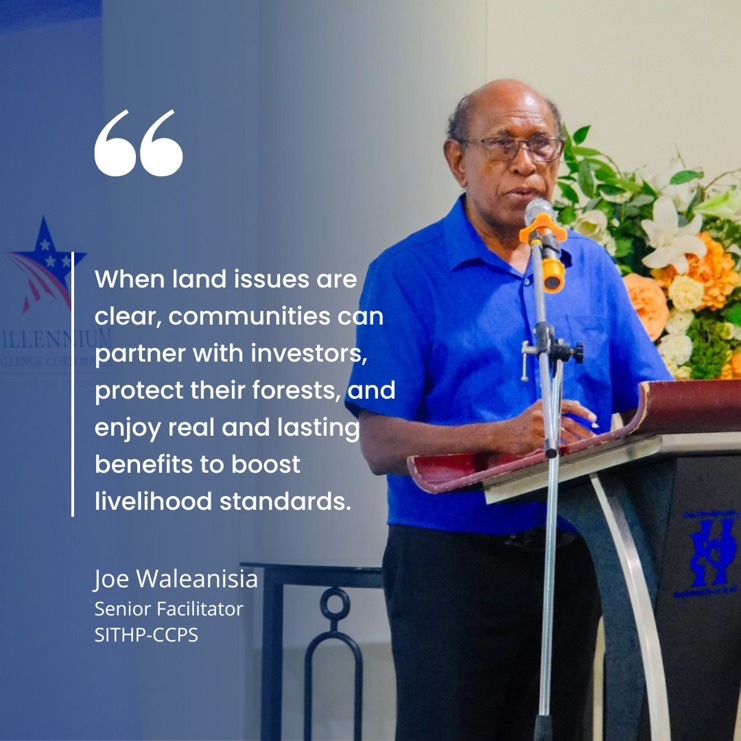
“The work we do under SITHP helps investors and landowners to invest and operate tourism and forest businesses in a fair and transparent way,” says Joe Waleanisia, SITHP Senior Facilitator.
Land and forest management laws and processes in Solomon Islands can be tough to navigate. SITHP uses a problem-solving, partnership-driven approach that brings together government, implementing partners, and local communities to identify what’s slowing investment and removes those barriers. This approach helps make land access clearer, speeds up approvals, and opens the door for new tourism and forest‑based economic opportunities.
The facilitative approach is helping to support responsible forest use while increasing tourism investment. When land issues are resolved, tourism investors can build a lodge, guesthouse, or eco-resort on agreed land—creating more jobs and income for local communities.
“This creates jobs for villagers, and the community earns regular income from land lease payments,” says Joe.
Similarly, when policies and rules are clear, forests can be managed more responsibly and profitably.
“Communities earn money from carbon trade by protecting forests. This money can pay school fees, support businesses, fishing ventures, water systems, and community projects.”
Joe’s work brings clarity and fairness to the system, giving communities the tools they need to steward their natural resources for stronger, long-term economic returns for Solomon Islands.


